
 Atishh Amte
Permanent Links and the Future of Digital Asset Sharing
In an era where digital content is proliferating at an unprecedented rate, the need for reliable and permanent ways to share digital assets is becoming increasingly crucial. The challenge is particularly pronounced for indie founders and small teams who often lack the resources for complex enterprise solutions. This is where the concept of permanent links enters the conversation—offering a streamlined, efficient method for sharing digital content without the overhead of intricate systems. As digital collaboration intensifies, the ability to easily manage and share resources is more relevant than ever.
The Problem with Traditional Sharing Methods
For many small teams and indie makers, sharing digital assets has traditionally been fraught with inefficiencies. Email attachments, shared drives, and cloud-based folders often lead to confusion and version control issues. These methods can become cumbersome, especially when dealing with frequent updates or a high volume of shared content. Moreover, these solutions often lack permanence; links can break, permissions can change, and files can disappear. The absence of a reliable, permanent linking solution can hinder productivity and collaboration, leaving teams searching for a more robust alternative.
How Builders Are Addressing the Challenge
The digital landscape is evolving, with new tools emerging to bridge these gaps. One such tool is Clowd, which provides a means to create permanent links for files and websites. This tool is tailored for indie founders, small teams, and creative professionals looking for a simplified sharing process. By offering a centralized and intuitive platform, Clowd addresses the need for a reliable method to manage and share digital assets. While not the only solution in the market, its focus on simplicity and accessibility makes it a noteworthy option for those in the AR/VR and UI/UX sectors.
Clowd in Practice: Streamlining Digital Asset Management
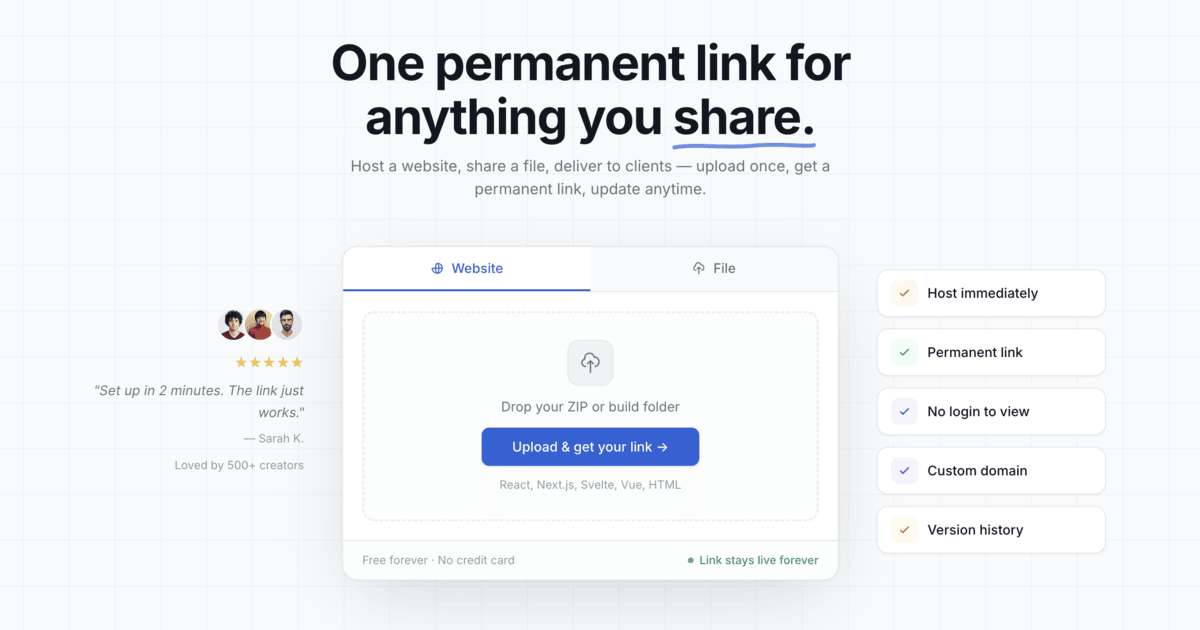
Imagine a small UI/UX design team working on a project that requires frequent sharing of design files and website prototypes. Using Clowd, the team can generate permanent links for each file and prototype, ensuring that all stakeholders have consistent access to the most up-to-date versions. Here's how Clowd works in practice:
- Generate a permanent link for a new design file.
- Share the link with team members and clients without worrying about broken links or expired permissions.
- Access the shared resources from any device, ensuring collaboration is not tethered to a specific location or hardware.
This streamlined process not only enhances efficiency but also reduces the cognitive load associated with managing multiple shared resources. For more details on how Clowd can fit into your workflow, visit their official website.
Unique Features and Differentiators
What sets Clowd apart in a crowded field of digital sharing tools is its commitment to simplicity and accessibility. Operating on a free model, it eliminates the financial barriers that many startups face. The tool's user-friendly interface ensures that even those with limited technical expertise can navigate and utilize its features effectively. While it may lack the advanced features required by larger enterprises, its focus on core functionalities like permanent links makes it a compelling choice for smaller teams and indie makers.
Target Audience: Who Should Consider Clowd?
Clowd is particularly well-suited for indie founders, small teams, and creative professionals, especially those working in AR/VR and UI/UX design. These users often require a straightforward and reliable method for sharing digital assets without the complexity of enterprise solutions. If your team values simplicity and cost-effectiveness in managing digital links, Clowd offers a practical solution worth exploring.
Meet the Maker: Atishh Amte
Clowd is the brainchild of Atishh Amte, whose vision was to simplify digital asset sharing for small teams and indie makers. While specific details about Atishh are not provided, the focus on creating a tool that addresses the challenges faced by creatives and founders suggests a deep understanding of the indie maker economy. This alignment with user needs highlights the thoughtful design behind Clowd's development.
Looking Ahead: The Evolution of Digital Sharing
As digital collaboration continues to evolve, tools like Clowd represent a shift towards more permanent and reliable sharing solutions. The trend towards simplicity and accessibility in tech tools is likely to continue, driven by the needs of small teams and indie founders. Looking ahead, the question becomes how these tools will further integrate with emerging technologies and what new challenges they might address. As the landscape changes, the importance of permanent links and streamlined sharing solutions will only grow.
Explore the Launch
To learn more about how Clowd can enhance your digital asset management, visit their website. Clowd launched on IndieHunt, where you can explore more about the project on its IndieHunt page. If you're a founder developing a similar tool, consider submitting your project to IndieHunt for visibility and engagement.
Clowd in action
Quick Answers
What are permanent links, and why are they important?
Permanent links are URLs that consistently point to a specific digital asset, ensuring reliable access over time. They are crucial for maintaining continuity and preventing broken links, which can disrupt workflows and collaboration.
Who benefits most from using Clowd?
Indie founders, small teams, and creative professionals in fields like AR/VR and UI/UX design benefit most from using Clowd. Its simplicity and cost-effectiveness make it ideal for users who need a straightforward way to manage and share digital assets without complex systems.
Is Clowd a good fit for large enterprises?
While Clowd offers valuable features for small teams, it may not meet the needs of large enterprises that require advanced functionalities or dedicated support. Its design is tailored to simplify processes for smaller, more agile teams.