

 Charlie Wong
Navigating the Health Tech Data Landscape
The health tech sector is rapidly evolving, driven by a growing demand for data-driven solutions that can inform better health outcomes. With the increasing complexity of nutritional data and the diverse needs of consumers, there's a clear demand for tools that can aggregate and analyze this information effectively. The abundance of data sources like Tufts Food Compass, Open Food Facts, and USDA FoodData, while valuable, presents a challenge in terms of accessibility and usability. As more startups enter the health domain, the ability to leverage comprehensive food data becomes not just a competitive advantage but a necessity.
The Challenge of Reliable Nutritional Data
For many small teams and indie founders working in health tech, the challenge lies in accessing accurate and comprehensive nutritional data without incurring significant costs. Traditionally, teams have relied on disparate data sources, often resulting in fragmented insights that can hinder product development and user recommendations. These limitations highlight a significant gap in the market for tools that not only consolidate data but also present it in a manner that is easy to navigate and apply. Current solutions often fall short, leaving developers to piece together data manually, which is both time-consuming and prone to error.
Innovative Responses from the Builder Community
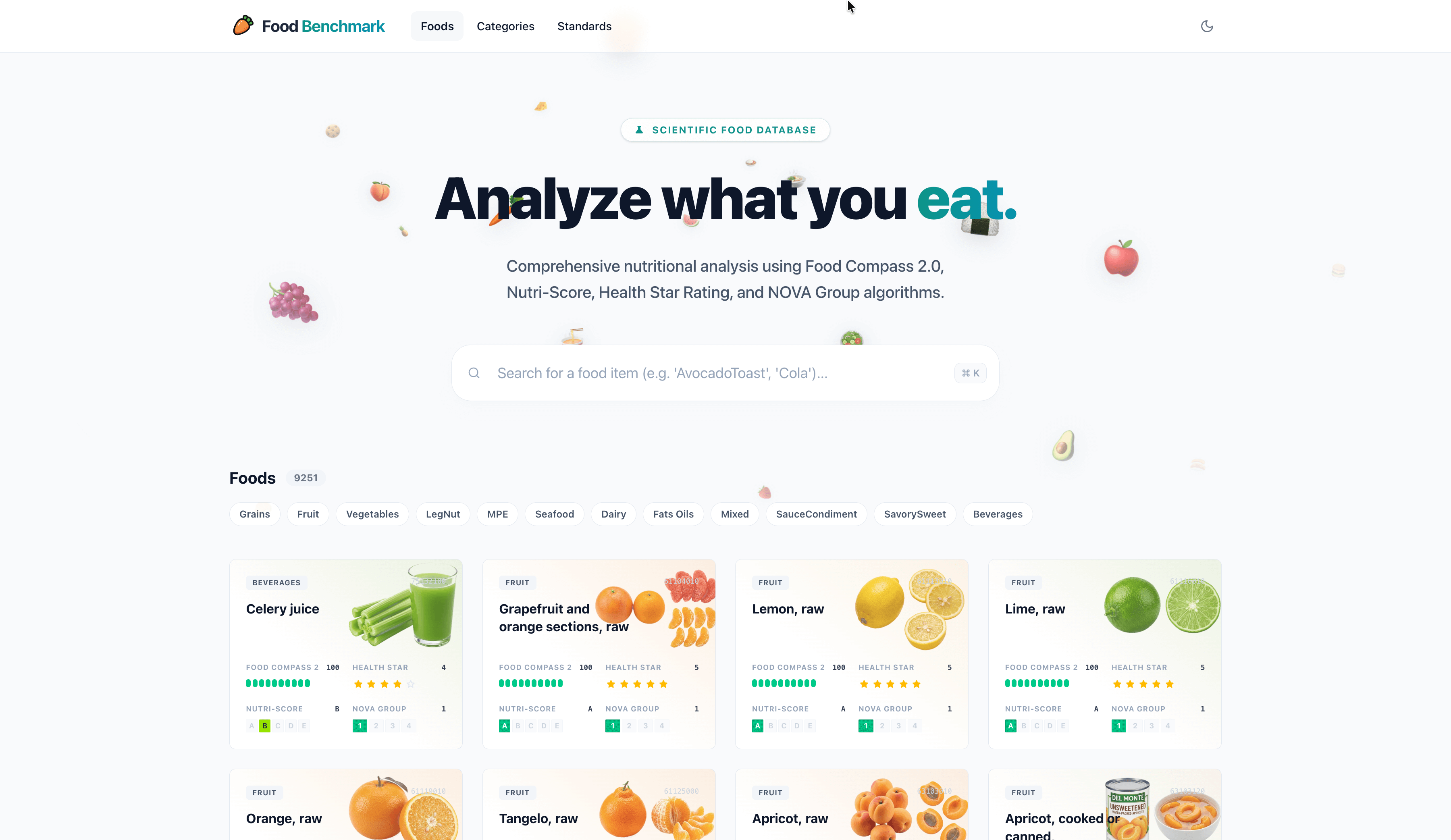
Recognizing the need for accessible and reliable nutritional data, several innovators are developing solutions aimed at simplifying this process. Food Benchmark is a standout example within this trend, offering a tool that aggregates and analyzes data from multiple reputable sources. Targeted at health tech innovators, nutritionists, and startups, it provides a user-friendly interface that allows users to access detailed nutritional insights. By focusing on usability and comprehensive data integration, Food Benchmark is well-positioned to support indie founders and small teams in their quest to develop cutting-edge health solutions.
Food Benchmark in Practical Scenarios
Consider a small startup developing a dietary tracking app. With Food Benchmark, the team can access a wide array of nutritional information, enabling them to provide users with precise dietary recommendations. The platform's integration of data from Tufts Food Compass and USDA FoodData allows for a nuanced understanding of food quality and nutritional content. Users can easily navigate through the data to inform product features and user guidance. This approach not only enhances the app's value proposition but also positions the startup as a credible player in the health tech space.
Noteworthy Features of Food Benchmark
One of Food Benchmark's most compelling aspects is its free access model, which democratizes access to high-quality food data. This is particularly beneficial for indie founders and small teams who might otherwise be priced out of accessing such resources. The platform's focus on usability and comprehensive data integration sets it apart from other solutions that may offer similar data but lack the same ease of access and application. By eliminating financial barriers, Food Benchmark empowers a broader range of innovators to leverage nutritional data in their projects.
Who Should Take Notice of Food Benchmark?
Health tech developers, nutritionists, and startups focusing on food-related projects stand to gain significantly from Food Benchmark. Its comprehensive data analysis and user-friendly interface make it an ideal tool for those looking to enhance their offerings with reliable nutritional insights. However, it's less suited for individuals seeking basic cooking or recipe resources, as its primary focus is on data-driven health applications.
About the Builder: Charlie Wong
Charlie Wong, the mind behind Food Benchmark, brings a keen understanding of the health tech landscape to the table. Although specific details about his background are not specified, his motivation to create a tool that addresses the data accessibility gap in health tech is evident. By focusing on a solution that empowers small teams and indie founders, Wong is contributing to a growing movement towards more accessible and actionable health data.
Future Prospects in Health Tech Data
As the demand for data-driven health solutions continues to grow, tools like Food Benchmark are likely to play an increasingly important role. The platform's approach to democratizing access to nutritional data could inspire similar innovations across other domains within health tech. Looking ahead, the challenge will be to continue enhancing data accessibility while maintaining the quality and reliability of insights provided. This ongoing evolution invites the question: how will the next generation of health tech tools further transform our approach to health and wellness?
Explore the Launch
To learn more about how Food Benchmark is shaping the health tech landscape, visit their official website. Discover the full scope of their offerings and how they can enhance your health-related projects. The project recently launched on IndieHunt, where you can explore other innovative launches in the health tech category. For founders building similar solutions, consider submitting your project to IndieHunt.
Food Benchmark in action
Quick Answers
What makes Food Benchmark unique in the health tech space?
Food Benchmark distinguishes itself by aggregating data from reputable sources like Tufts Food Compass and USDA FoodData, providing comprehensive and accessible nutritional insights. Its free access model allows indie founders and small teams to leverage valuable data without financial constraints.
How can startups benefit from using Food Benchmark?
Startups focusing on health tech can use Food Benchmark to access detailed nutritional data, which can enhance product development and user recommendations. The tool's usability makes it easier for teams to integrate reliable data into their health solutions, boosting their competitive edge.
Is Food Benchmark suitable for casual users looking for recipes?
No, Food Benchmark is designed primarily for health tech innovators and nutritionists who need detailed nutritional insights. It is not intended for casual users seeking basic cooking or recipe information.