
 Bohdan Yaroshepta
Decoding the Sales Funnel: The Emerging Need for Simplified Analytics
In the evolving landscape of digital entrepreneurship, understanding customer behavior is pivotal. Yet, for many solo founders and small teams, comprehensive analytics can seem daunting, often requiring significant resources and expertise. The challenge lies in balancing the need for detailed insights with the simplicity that indie founders require. As businesses increasingly operate in digital spaces, the ability to pinpoint where potential customers drop off in the sales funnel has never been more critical. This trend underscores a growing demand for intuitive, accessible tools that provide actionable insights without overwhelming users with complexity.
The Challenge of Conversion Leaks in Sales Funnels
Sales funnels are the lifeblood of digital business strategies, guiding potential customers from awareness to purchase. However, conversion leaks—points where potential customers abandon the process—pose a significant challenge. Traditional analytics tools, while powerful, often cater to large organizations with teams dedicated to data analysis. For indie makers, these tools can be prohibitively complex and costly. The gap leaves small teams grappling with limited visibility into their sales processes, often relying on guesswork or incomplete data to make decisions.
Innovative Solutions for Indie Makers: Enter fnel
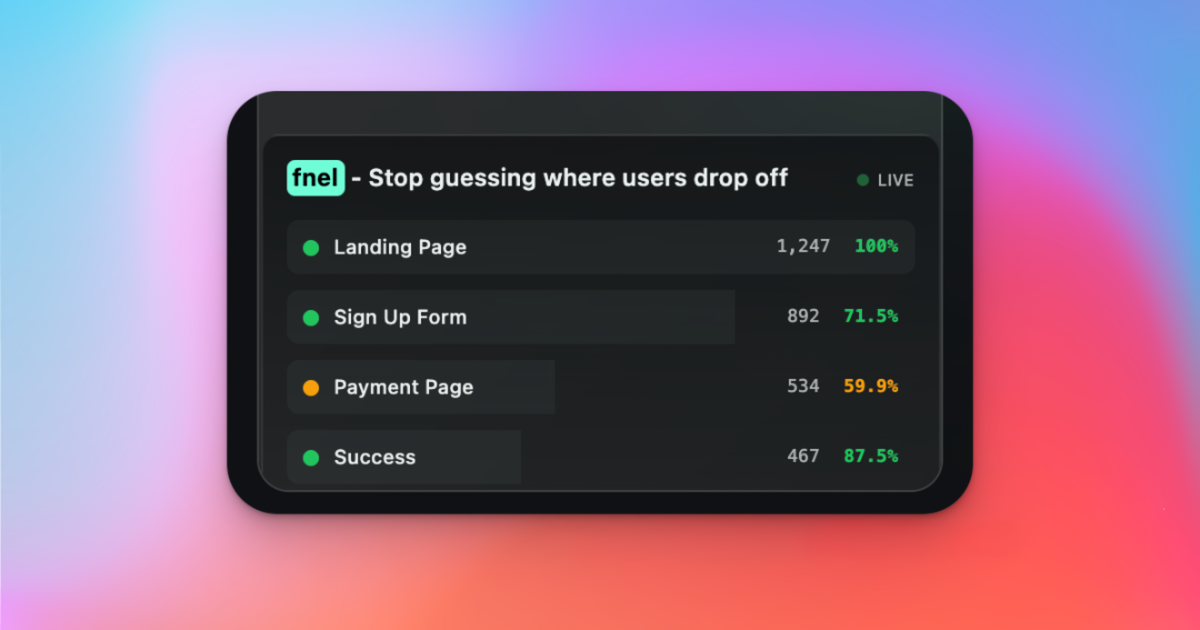
Amidst these challenges, innovative solutions like fnel are emerging to fill the void. fnel is a business analytics tool crafted specifically for solo founders and small teams, focusing on tracking drop-offs and conversion leaks within sales funnels. By providing detailed insights into user behavior, it empowers users to make informed decisions aimed at optimizing conversion rates. This approach not only caters to the unique needs of indie makers but also democratizes access to essential analytics, offering a free model that removes financial barriers.
Implementing fnel: A Practical Guide
For solo founders and small teams looking to leverage fnel, the tool offers a straightforward yet powerful way to optimize sales funnels. Users begin by integrating fnel into their sales process, allowing the tool to track user interactions. The platform then identifies drop-off points, highlighting where potential customers are leaving the funnel. With this data, users can adjust their strategies, whether by improving website navigation, enhancing content, or simplifying checkout processes. This iterative process, guided by fnel’s insights, can significantly enhance conversion rates without the need for extensive analytics expertise.
Distinctive Features of fnel
What sets fnel apart in the crowded field of business analytics tools is its focus on accessibility and relevance for small teams. The free pricing model ensures that even the smallest startups can benefit from data-driven insights without incurring costs. Additionally, its user-friendly interface makes it an ideal choice for those who may find larger analytics solutions overwhelming. By targeting solo founders and small teams, fnel positions itself uniquely in the market, focusing on a niche that is often underserved by traditional analytics providers.
Target Audience: Is fnel Right for You?
fnel is particularly suited for indie founders and small teams who need to optimize their sales funnels without the complexity and cost of enterprise-level solutions. If your team struggles with understanding where and why potential customers are dropping off, fnel offers a compelling solution. However, larger businesses with more extensive analytics needs may find the tool’s features limited, as it is designed specifically for smaller scale operations.
About the Creator: Bohdan Yaroshepta
fnel is the brainchild of Bohdan Yaroshepta, an entrepreneur with keen insight into the challenges faced by indie makers. Yaroshepta’s experience in the startup ecosystem has informed his approach to building a tool that is both accessible and effective. By focusing on the specific needs of solo founders and small teams, he addresses a critical gap in the analytics space, empowering entrepreneurs to harness data without overwhelming complexity.
The Future of Business Analytics for Indie Makers
As the digital business landscape continues to evolve, tools like fnel highlight a significant shift towards more accessible and user-friendly analytics solutions. By focusing on the needs of smaller teams, these tools are paving the way for a new era of data-driven decision-making. Looking ahead, the challenge will be to continue evolving these solutions to meet the growing demands of a diverse range of businesses. Will the next wave of analytics tools further simplify data insights, or will they integrate more advanced technologies to maintain their relevance?
Explore the Launch
To learn more about how fnel can enhance your sales funnel optimization, visit the fnel website. This project, launched on IndieHunt, represents a significant step forward for indie makers seeking to leverage analytics without the complexity. Explore fnel on IndieHunt and discover how it can transform your approach to customer engagement. Builders with similar innovative solutions are encouraged to submit on IndieHunt and gain visibility in the startup community.
fnel in action
Quick answers
What does fnel offer to solo founders?
fnel provides solo founders with a streamlined analytics tool that focuses on tracking drop-offs and conversion leaks within sales funnels. It delivers actionable insights to help improve conversion rates without the complexity of larger analytics platforms.
How is fnel different from other analytics tools?
fnel stands out due to its focus on accessibility and simplicity for small teams. Unlike traditional analytics solutions that may be overwhelming or costly, fnel offers a free model with a user-friendly interface tailored specifically for indie makers and small teams.
Is fnel suitable for large organizations?
While fnel is ideal for solo founders and small teams, larger organizations with extensive analytics needs may find its features limited. It is designed to cater specifically to smaller operations, providing essential insights without the complexity of enterprise solutions.