

The Rise of Video Content Accessibility and Searchability
As video content continues to dominate the digital landscape, the demand for tools that make this content more accessible and searchable is rising. Platforms like YouTube host an immense amount of video data, yet extracting valuable insights from this content can be cumbersome. The ability to transcribe and search video content is no longer a luxury but a necessity for content creators, marketers, and educators. This shift in content consumption has opened avenues for innovative solutions that streamline the process of accessing and utilizing video data.
The Challenge of Extracting Insights from Video Content
Manually transcribing video content is a time-consuming task that many teams still undertake. This traditional approach is not only labor-intensive but also prone to errors. Current solutions often fall short by providing either incomplete transcripts or lacking the ability to search and export the data effectively. As video consumption grows, so does the need for efficient ways to repurpose and analyze this content. The gap between the availability of video content and the accessibility of its insights has become a critical pain point for many professionals.
Innovative Approaches to Video Transcription
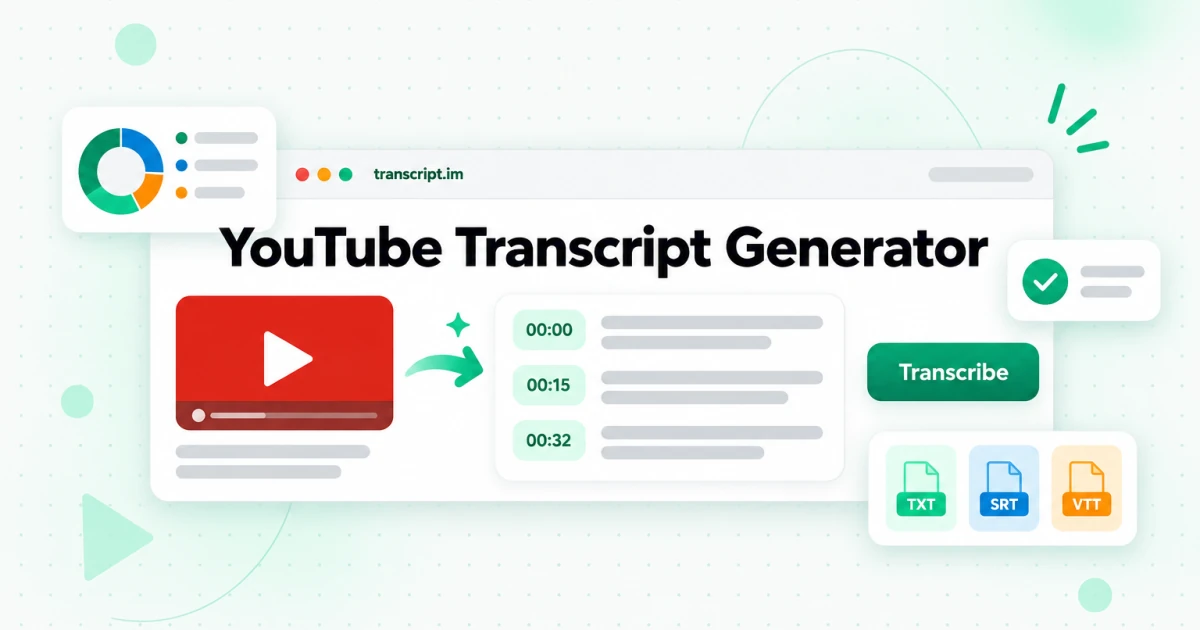
In response to these challenges, a new wave of developer tools is emerging, offering automated transcription services that integrate seamlessly with popular platforms. transcript.im exemplifies this trend by providing a tool that converts YouTube videos into searchable and timestamped transcripts. This service caters specifically to content creators, marketers, and educators who need efficient access to video content. By automating the transcription process and allowing easy export in multiple formats, transcript.im stands out as a practical solution to a growing problem.
Utilizing transcript.im in Real-World Scenarios
Consider a content creator looking to repurpose segments of their YouTube videos for social media posts. With transcript.im, they can swiftly generate transcripts and identify specific video sections using timestamps. This capability transforms a previously tedious task into a straightforward process. Educators can also leverage transcript.im to create accessible learning materials by exporting video transcripts into text formats such as TXT, SRT, or VTT. Marketers analyzing video content for trends can search through transcripts quickly to pinpoint relevant information.
By visiting transcript.im, users can convert any public YouTube video into a transcript, search through the text, and export the data for further use, demonstrating its versatility across various applications.
Key Differentiators of transcript.im
One of the standout features of transcript.im is its ability to support multiple social media platforms, including TikTok, Instagram, LinkedIn, Twitter, and Facebook, broadening its applicability. While the tool offers a free usage quota, the exact pricing model remains unspecified, which suggests a flexible approach to user needs. In a market where many tools focus solely on transcription, transcript.im's ability to search and translate transcripts adds significant value, enhancing its appeal to a diverse user base.
Target Audience: Who Can Benefit?
transcript.im is particularly beneficial for content creators who need to efficiently manage and repurpose video content. Marketers seeking to extract and analyze video insights will find the searchability feature invaluable. Educators looking to create accessible materials can also leverage the tool's export capabilities. However, those requiring real-time captioning or advanced editing features might need to explore additional solutions.
Meet the Maker: Leo
Founded by Leo, transcript.im is born out of a desire to simplify the complex process of video transcription. While specific details about Leo’s background are not mentioned, his focus on developing a tool that addresses the accessibility and searchability of video content reflects a deep understanding of the challenges faced by content creators and educators in the digital age.
The Future of Video Content Accessibility
As the digital content landscape continues to evolve, the demand for tools like transcript.im that enhance accessibility and usability will only grow. The ability to convert video data into actionable insights is crucial for staying competitive in an increasingly content-driven world. How might future advancements in AI further transform video content management, and what new opportunities could arise from these developments?
Explore the Launch of transcript.im
For those interested in exploring this innovative solution, visit the transcript.im website. The project has launched on IndieHunt, where you can discover more about its capabilities and the impact it aims to make. Check out transcript.im on IndieHunt for more details. Indie founders and small teams with similar projects are encouraged to submit on IndieHunt.
transcript.im in action
Quick Answers
What platforms does transcript.im support?
transcript.im supports multiple platforms such as YouTube, TikTok, Instagram, LinkedIn, Twitter, and Facebook, allowing users to transcribe videos from various sources.
How does transcript.im enhance accessibility?
By providing searchable and timestamped transcripts, transcript.im makes it easy to locate specific sections of video content, thus enhancing accessibility for users looking to extract insights quickly.
Is transcript.im suitable for all video transcription needs?
While transcript.im is excellent for generating and exporting transcripts, it may not be suitable for users needing real-time captioning or advanced video editing features.